

About Elaina Donohoe, LCPC
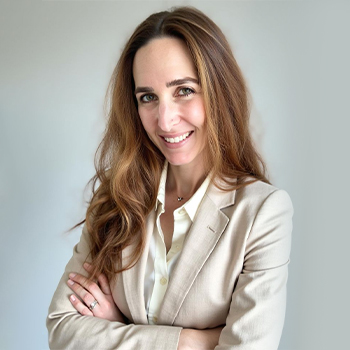
Most people who arrive here aren’t new to self-awareness.
They’ve asked good questions.
They’ve thought things through.
They’ve carried a lot – responsibility, complexity, the weight of circumstances that don’t resolve on demand.
And still, something isn’t shifting the way it should.
That’s where this work begins.
Background
Elaina’s path into private practice was built through real systems –
Legal, medical, insurance, and disability –
Long before it was built in a therapy office.
She began at age 11 in the orbit of her father’s plaintiff-side litigation firm in the Wood River Valley.
She organized medical records and watched how her father attended to people…
Those who have survived work accidents and serious injuries were given the same care he brings to crafting letters and pleadings.
It was an early and formative education in how institutions, systems, and power intersect with real human suffering –
and one that laid the groundwork for her later work.
She worked as a legal assistant across firms in personal injury, workers’ compensation, and family law.
She held many other jobs – including tiny airport operations, coffee shops, field-trial dog work, riding horses, and pizza joints –
Before finding her way to a women’s shelter at 23.
This first step into the helping profession made everything that came before feel like preparation for becoming a therapist.
That foundation carried forward through subsequent years in:
forensic rehabilitation counseling
complex case management within health insurance
advocacy with survivors of violence across three shelter settings
Work that required understanding not just what people were feeling, but what they were up against.
She pivoted from forensic disability evaluations in workers’ compensation when the staggering and heartbreaking statistics of youth suicide following the pandemic could no longer be set aside.
She left that arena to work in intensive outpatient care – facilitating groups of teens and young adults, serving as a primary therapist, and doing family therapy – and found her clinical home.
She returned to school later in life herself, completing her Master of Education in Rehabilitation Counseling with a 4.0 GPA at 39 – an experience that deepened her particular attunement to clients who feel they arrived late to their own potential, or who carry the quiet fear that it may be too soon to hope.
She specializes in disability – both visible and invisible – and the psychological layers that accompany it:
identity, grief, adaptation, autonomy,
and the space between how life was expected to look and how it actually unfolds.
Her forensic background in vocational rehabilitation and life care planning gives her a particular edge with clients navigating chronic illness — supporting not just the emotional weight, but the practical terrain of medical systems, specialist relationships, and self-advocacy.
Many who arrive here have already tried therapy.
Some have tried it more than once.
They come in skeptical – not because they don’t want change, but because they’ve worked hard in rooms that didn’t quite fit, with approaches that didn’t quite land.
That experience is taken seriously here.
Elaina works at a pace that meets you where you are – building trust quickly without rushing the work, offering direction without pressure, and returning the expertise to you.
Clients consistently describe feeling genuinely seen, often for the first time.
For those who have come to think of themselves as hard to help, that tends to change things.
Her primary approach is Motivational Interviewing –
a method oriented toward drawing out your own wisdom and direction rather than prescribing it.
She also works with existential frameworks for clients processing religious, spiritual, or cult-related trauma;
uses the Flash technique for trauma processing – a method that achieves significant reduction in distress without requiring the client to fully re-experience traumatic memories, making it accessible for those who have found traditional trauma approaches overwhelming;
and integrates clinical hypnotherapy where it fits.
Lived experience comes into the room with her.
Elaina is a brain tumor survivor and is deaf on one side with tinnitus.
She has also navigated blended families, single parenthood, divorce, and the particular kind of rebuilding that follows significant loss.
None of those experiences define her work – but all of them inform how she sits with people who are doing the same.
Outside the Office
Elaina grew up on horseback in the mountains of south-central Idaho – the daughter of a plaintiff attorney who has spent decades advocating for people seriously harmed by others, and a mother who has spent years healing both horses and people through therapeutic work at their ranch in the Wood River Valley.
Her mother took on the horses others would not touch –
the damaged, the traumatized, the ones deemed too far gone – and brought them back.
That origin shaped something fundamental in Elaina:
a belief that advocacy and healing belong together,
and that the people most in need deserve someone who doesn’t look away.
At home, she and Adam are raising three wonderful children in a household that is active and full, and that gathers around the table every evening.
She can often be found rollerblading or walking along the Boise River –
Sometimes alongside her best friend,
Sometimes alone in the quiet of nature –
Someone who knows that moving through the world at your own pace, outside, is its own kind of medicine.
She values time that is intentional:
Being outside, spending time with family and friends, and creating things that require patience and attention.
That same orientation shows up in my work:
Slowing down where it matters,
Paying attention to what others might miss,
And allowing change to take shape in a way that actually holds.